Sign Up for Email Updates

  • America In Distress

    Second Amendment

    A well regulated Militia, being necessary to the security of a free State, the right of the people to keep and bear Arms, shall not be infringed.

  • Ownership

    “The only thing necessary for the triumph of evil is for good men to do nothing.” ― Edmund Burke )

smith

Second Amendment Supreme Court: The Semiautomatic Rifle Showdown
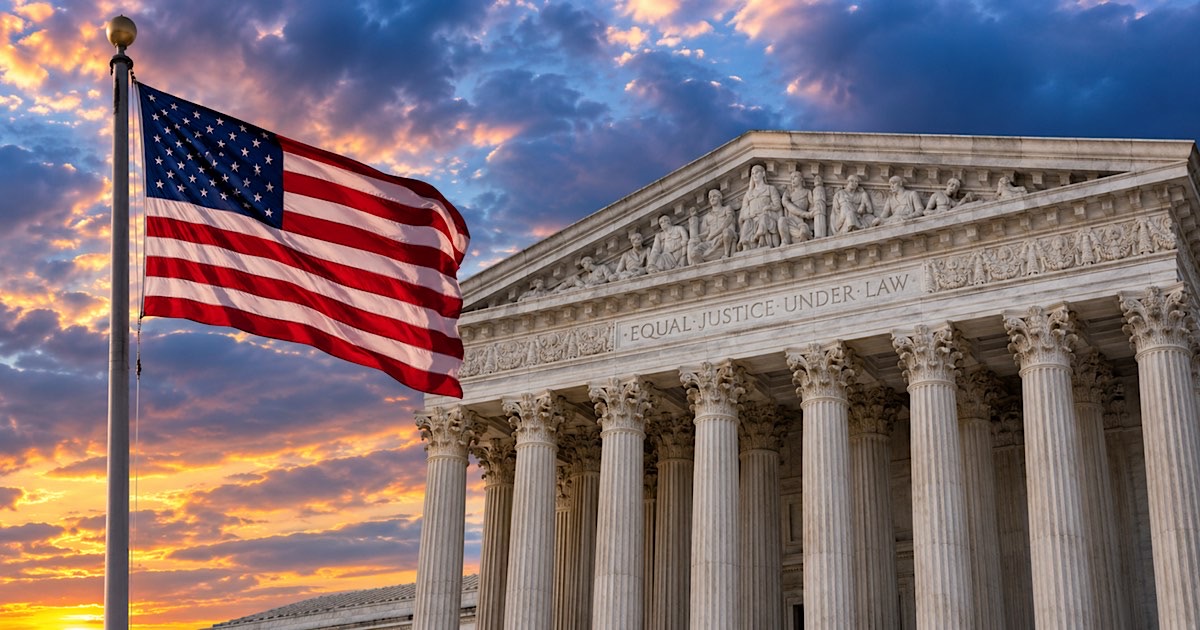
The U.S. Supreme Court building and American flag highlighting the Second Amendment Supreme Court case.

By Brad Hodges

While political attention remains heavily fixed on legislative matchups, a parallel constitutional battle over the scope of the Second Amendment is unfolding before the nation’s highest judicial body. Semiautomatic firearms—most notably the AR-15 platform—have become the core focus of intense state and federal regulatory efforts. With a monumental challenge officially sitting on the U.S. Supreme Court docket, the legal framework governing American gun ownership faces its most significant turning point in a generation.

The judicial test arrives as opponents of the Second Amendment continue to introduce restrictive measures in Congress. Recent legislative proposals have sought to enact sweeping national changes, including explicit bans on specific classes of firearms, strict limitations on standard-capacity magazines, and the implementation of universal red-flag laws lacking judicial due process protections.

The primary barrier preventing these proposals from reaching executive signature has been a divided or narrowly held legislative branch. Should political control flip, these bills are positioned to transition from committee dockets straight to federal law. For conservative and independent voters, this reality underscores why control of government branches directly dictates the permanent boundaries of individual liberty.

The Ultimate Test: Viramontes and Grant

This legislative friction forms the backdrop for the high court’s upcoming session. The Supreme Court has consolidated two historic challenges to state and regional firearm restrictions: Viramontes v. Cook County and Grant v. Higgins.

Oral arguments are officially scheduled before the justices on December 2, 2026. The central constitutional question the Court must resolve is whether the Second and Fourteenth Amendments guarantee an individual right to possess AR-15 platform rifles and similar semiautomatic firearms.

Gun rights proponents base their arguments on established precedents, most notably the Heller (2008) and Bruen (2022) decisions. Under these frameworks, firearms that are “in common use” for lawful purposes receive strict constitutional protection. Semiautomatic rifles represent the single most popular class of modern rifles in the country, with millions of law-abiding citizens possessing them for sport, hunting, and home defense. Conversely, defenders of the regulations claim these platforms are uniquely dangerous and fall completely outside traditional protections.

Safeguarding Constitutional Boundaries

The impending Supreme Court ruling will establish the legal baseline for firearm regulations for decades. However, the long-term defense of the Constitution relies on a supportive legislative branch. Congress retains the constitutional authority to shape lower federal courts, confirm judicial nominees to the bench, and block restrictive legislative packages permanently.

Maintaining an active presence at the ballot box remains the most direct and necessary method for citizens to ensure their constitutional rights remain secure against shifting political tides.
Second Amendment Election Stakes: Why Congressional Control Matters

By Brad Hodges

Public attention remains heavily fixed on major national headlines and state-level races. For conservative and independent voters who place a premium on constitutional governance, the real stakes of this election cycle rest entirely on control of the U.S. Congress. Control of the legislative agenda makes these elections a critical turning point for the preservation of individual liberties. For specific information on election dates, early voting periods, and registration deadlines in your jurisdiction, consult your official state or local election authority.

While executive actions and administrative rules frequently make the news, federal legislation remains the only mechanism for creating permanent, sweeping changes to national law. Over the past session, congressional Democrats have repeatedly introduced measures aimed at restricting firearm ownership. These legislative efforts have included proposals for universal gun registration databases, mandatory red-flag laws that lack strict judicial due process protections, and federal restrictions on magazine capacities.

The only barrier preventing these proposals from reaching the President’s desk has been a divided or narrowly held Congress. If the legislative branch shifts control, these bills will move from committee hearings to federal law with minimal resistance. For independent voters who value personal freedom and a constitutional check on government power, sitting on the sidelines is no longer a neutral option.

The Looming Supreme Court Showdown

The structural importance of the legislative branch becomes even more apparent when examining the federal judiciary. The composition of the courts depends entirely on which party maintains control of the Senate, which is tasked with confirming judicial nominees.

This relationship is particularly urgent given the Supreme Court’s current docket. The high court is preparing to resolve one of the most significant Second Amendment questions in American history. On December 2, 2026, the Court will hear oral arguments in two consolidated cases: Viramontes v. Cook County and Grant v. Higgins.

The justices will rule directly on the constitutionality of state and local bans targeting semiautomatic rifles, specifically focusing on the AR-15 platform. Semiautomatic rifles are among the most popular and commonly owned firearms for lawful purposes in the United States, placing them at the center of protected arms under historical precedents.

A Direct Call to Action

The upcoming judicial ruling will shape gun rights for a generation, but the long-term defense of the Constitution requires a supportive legislative branch. Flipping or widening majorities in Congress determines whether future judicial appointments are protected, and whether restrictive gun bills are blocked permanently.

To ensure your voice is heard, confirm your local polling location, review your registration status, and make a definitive plan to vote.

Brad Hodges Blog
Privacy Overview

This website uses cookies so that we can provide you with the best user experience possible. Cookie information is stored in your browser and performs functions such as recognising you when you return to our website and helping our team to understand which sections of the website you find most interesting and useful.